
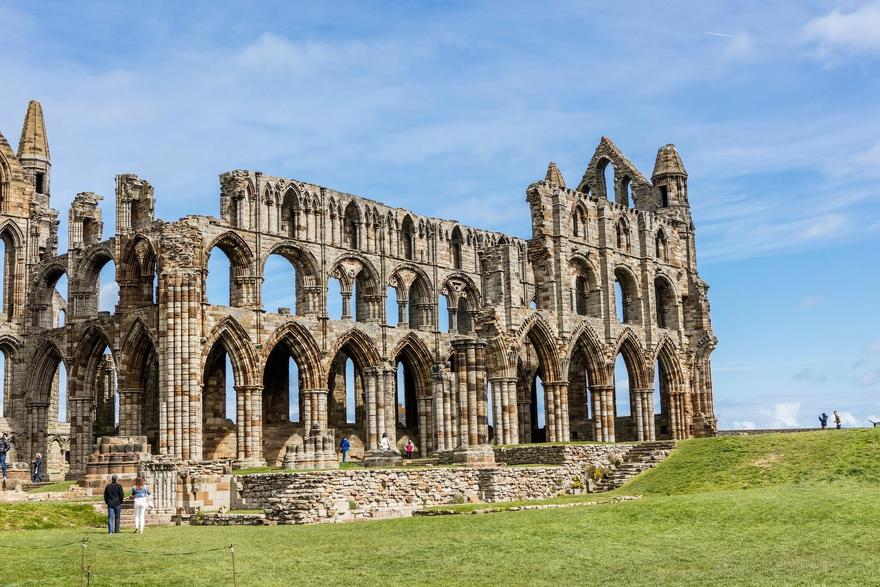
What is Whitby’s unique connection to Easter? How is the Easter date decided? In the 7th century Whitby Abbey hosted a landmark meeting known as the Synod of Whitby, where Christian missionaries gathered to discuss using a formula that would settle once and for all, when Easter should be celebrated each year. Until then, confusion abounded as the Celtic and Roman Christians celebrated Easter at different times. The formula is still in use today to set the date.
This Easter, Whitby and the North York Moors coastline village of Runswick Bay will feature in BBC Two’s latest series of Pilgrimage, as seven pilgrims follow the Way of St Hild, a trail that honours an influential figure in the history of English Christianity. St Hild, or Hilda, became Abbess of Whitby in around 657, establishing a monastery for both men and women. Prior to this, she had been Abbess of Hartlepool Abbey and so the Way of St Hild traces her 47-mile journey from there before entering the North York Moors National Park at Saltburn and continuing to follow the Cleveland Way National Trail along the coast, passing through Skinningrove, Staithes, Runswick Bay and Sandsend, finally arriving at Whitby Abbey.
Such is the importance of the saint, there’s actually a second pilgrimage in her honour called St Hilda’s Way, a 43-mile route that runs from the holy spring in Hinderwell, before crossing moorland to reach Danby. From there the route picks up the Esk Valley Walk, passing through villages such as Lealholm, Egton Bridge and Glaisdale before reaching Whitby Abbey. Along the way, pilgrims can visit eight churches and chapels dedicated to St Hild, and walk on some of the ancient ‘trods’, stepping stones laid to ease the monks’ progress. Today Whitby Abbey’s remains belong to the later Benedictine-built place of worship but they’re on the same site as St Hilda’s abbey, occupying a commanding position on the headland above the town.
Thanks to Amanda Brown for the words & photo.