
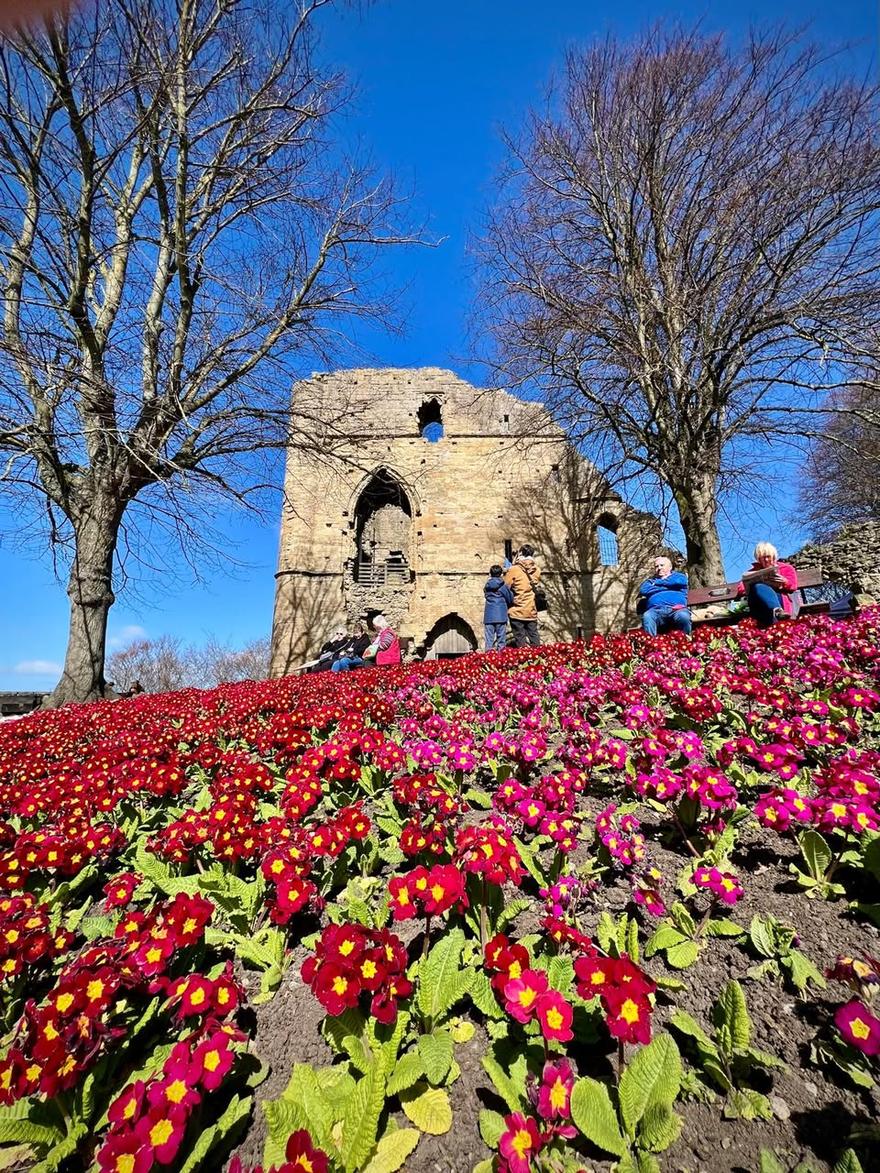
A centre for quarrels, a romantic painting backdrop and a tussle with the Scots. If you’ve ever visited Knaresborough (the town’s name derives from the Anglo Saxon words Knarre for rocky outcrop and Burgh for fortress), you can see just how strategically important its castle was across the centuries that followed.
Perched on the natural defences of a rocky promontory overlooking the River Nidd, the first documented castle was built by the Normans in the 1100s where it soon became infamous for harbouring the murderers of Thomas Becket, the Archbishop of Canterbury.
A century later and King John recognised the castle as a well-placed stronghold for holding back the Northern rebels. He turned it into a munitions centre where it became one of England’s most important factories for producing quarrels, the bolts fired by crossbows.
The ruins you see today date back to the 14th century when, under King Edward l’s reign it was modernised, and subsequently survived raids by the Scots, unlike many parts of Knaresborough which were torched and burnt.
The castle gained an elevated status after becoming a Royal residence, and centuries later managed to survive the Civil War until it was blown up as part of a parliamentary act ordering the destruction of castles to prevent Royalists using them.
By the 18th century the picturesque and romantic ruins had become a tourist attraction and a magnet for artists, including JMW Turner who made a beeline for Knaresborough on both his sketching tours of England in 1797 and 1816.
Words thanks to Amanda Brown, photos thanks to Steve Christian