
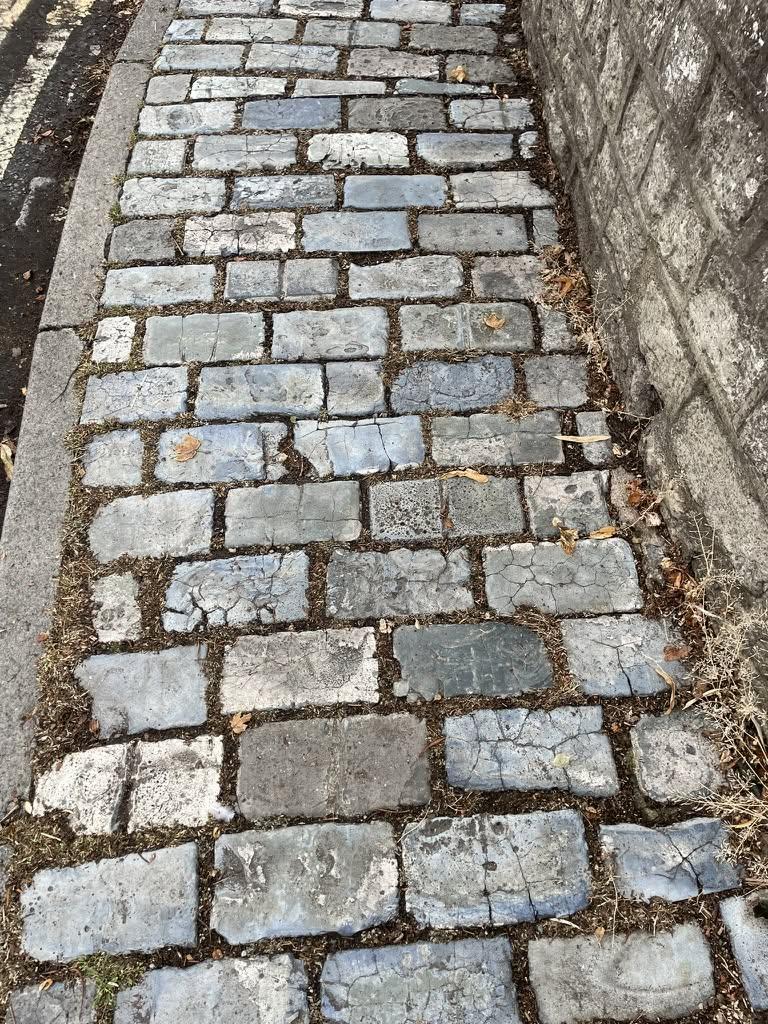
We often ignore the history beneath our feet, trampling over curious stories & hard work of the past. You might have occasionally spotted some grey-blue stones? The paving stones are called scoria bricks.
In the 1860s the Teesside iron industry's blast furnaces were crucial to the nation's output. Huge amounts of waste slag were produced as a by-product.
Instead of discarding it, the molton by-product was recycled, poured into moulds to create very tough paving. The grey-blue blocks can still be seen because they are so tough and frost-proof. The minerals in the slag create the distinctive colour.
Tonnes of the practical and attractive bricks were exported to Canada and the United States, India, Africa and Europe.
You can still see examples of the paving, often along the gutter side of roads. I've spotted scoria bricks (usually rectangular but sometimes formed into octagonal patterned shapes) in Skinningrove, Staithes, Ripon and York.
They can occasionally be found washed up on Skinningrove Beach too — a lovely blue-grey and surprisingly beautiful for something made from industrial waste.