
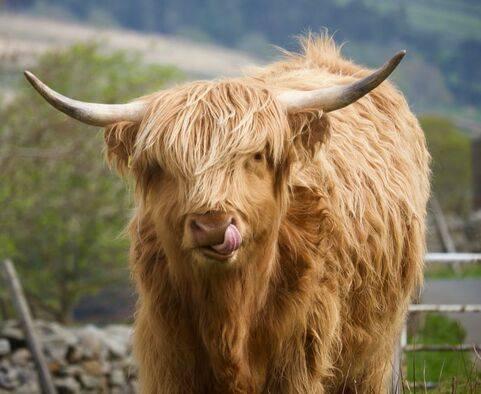
Everyone expects to see sheep in the Yorkshire Dales but seeing Highland cattle often takes people by surprise. When you come across folds (herds of Highlanders) of them above Kettlewell, near Malham, Settle and Hellifield they do have a just-got-up-didn’t-realise-you-were-visiting look about them!
Those shaggy coats take some brushing, as any farmer showing Highlanders at one of the agricultural shows will tell you.
They’re obviously associated with Scotland, but are now found through-out the world. With their wild good looks and long locks, Highland Cattle are instantly recognisable and much loved. They’re one of Britain’s oldest cattle breeds, largely unchanged over centuries.
Thanks to their thick under coats, they’re very hardy, thriving on upland hills with poor land and high rainfall so are often found in locations where other cattle couldn’t exist. They can be found 10,000 feet up in the Andes so will feel more than comfortable grazing in the Dales mists, high on our hills.
These majestic animals are very photogenic, and may be any colour from a pale gold to red and black. There’s real purpose to their long horns and long eyelashes. They can use their long curved horns to move snow and graze, and their lovely long fringes and eyelashes protect against bad weather. Apart from the obvious way, you can tell male and females apart by their horns. Females tend to have thinner horns, curving upwards and usually longer than bulls’ horns. Bull’s horns curve forward.
Highlanders are really good mothers: they may have as many as 15 calves over 18 years, usually calving outside without too much help. Highlander produce good quality meat, with less fat and cholesterol than other beef cattle.
You’d expect Highland Cattle to be heavy – they certainly look strong and powerful. But they’re actually very light on their feet and can be good for conservation, trampling bracken, enabling other wild flowers to grow and flourish. Watch Highland Cattle carefully as they feed and you’ll see they pull up grass with their tongues so don’t graze as close to the ground as sheep.