
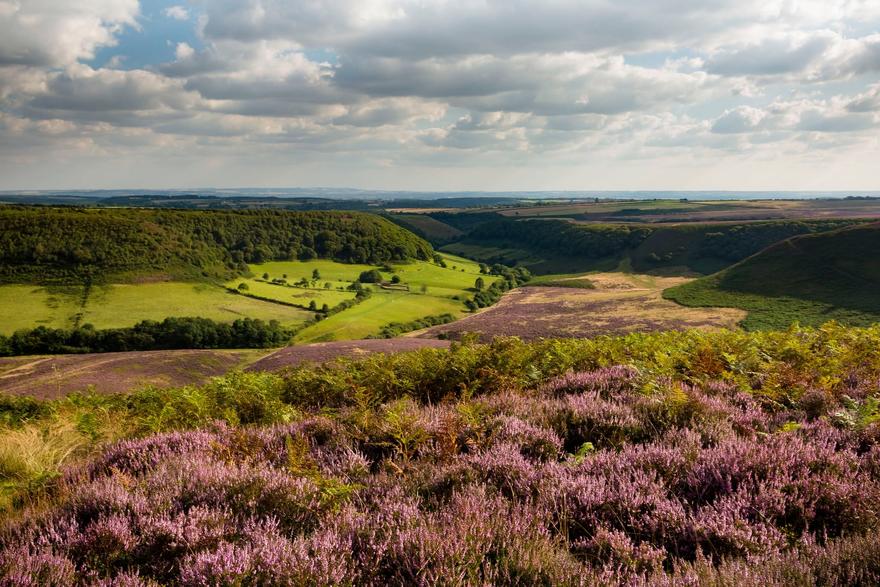
Roofs, beds, brooms, homes, clothes, magical stories: heather is more than just a pink moorland covering. Unremarkable for much of the year, the whole landscape changes once the heather blooms. It's a very hardy, wind-resistant plant that thrives where few other plants survive.
The first heather to bloom, around the end of July, is bell heather, followed by ling between August and September. You can enjoy the purple, pink and mauve haze of colour across North Yorkshire in Yorkshire Dales National Park and North York Moors National Park.
Heather was once a common roofing material, especially in upland areas where other resources were scarce. The tough, wiry stems of ling heather could be bundled into thatch and tied tightly together, creating a durable and weather-resistant covering.
The flowers and stems of ling heather can be used as a natural dye: the purple flowers actually dye cloth yellow, or green if iron is added!
Look closely at the wriggly stems and they might remind you of something? Witches brooms maybe? The stiff stems were bundled and bound into brooms for sweeping hearths and floors. During lean times, dried heather was used as kindling or even as a fuel (it can light quickly which is why you need to be very careful in moorland areas during droughts). If you've ever tried to sit on a patch of heather, you'll have felt how springy it is, making for a primitive mattress. The dry stalks can be twisted together to create a sort of rope which doesn't deteriorate in sea water.
Folklore is rich with stories associated with heather and medicinal uses. It was seen as a symbol of protection and good luck, tucked into doorways or added to hand-fasting ceremonies.
Queen Victoria's servant, Mr. Brown spotted a piece of white heather and supposedly gave it to her for good luck. White heather is less common and is associated with stories of battle victories so that may account for its popularity. In Scotland heather has been used for centuries to make ale and other drinks.
One North Yorkshire tale tells of a young moorland bride who wove sprigs of white heather into her bouquet for luck. White heather was said to grow only where no blood had been spilled, a symbol of peace and purity.
Another legend from the moors speaks of lovers who would meet in secret amongst the heather, far from village eyes. One tragic story tells of two shepherds from rival communities who carved their names into a stone hidden in the heather, returning each year until one never came back. Some say that particular patch of heather blooms more brightly still. I've no idea where it is!
Heather moorland is one of the UK’s rarest and most threatened habitats—and North Yorkshire boasts some of the largest expanses. These moors support ground-nesting birds like red grouse, curlews, and golden plovers. Bees, butterflies, and moths all rely on the nectar-rich flowers. A couple of weeks ago I was pleased to see an adder enjoying the shade of the heather above Rosedale.
Image: Ebor Images/North York Moors National Park