
Where can you find stots, bullocks and jags? Welcome to the world of Long Sword dancing, a Yorkshire tradition which is historically performed around the Winter Solstice at Christmas and on Plough Sunday in January to mark the beginning of the agricultural year.
Sword dances are the northern equivalent of Morris dancing, with a circle formed by six or eight performers, each holding the end of their neighbour’s sword before weaving their way under or over the swords without breaking the circle. The dance ends with all the swords held aloft in a ‘lock’ forming a shape such as a star.
The swords and the stamping are said to be symbols of ‘waking the earth’ so it produces a bountiful crop.
Traditionally Long Sword dancers accompanied gangs of farmworkers who were called bullocks, jags or stots, as they dragged a plough through villages demanding gifts of money, food or drink!
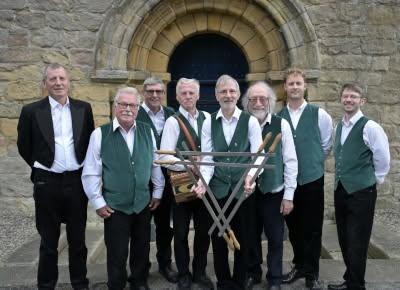
Nowadays it’s not quite so raucous. Look out for the Highside Longsword dancers, dressed in turquoise waistcoats, black cord trousers and white collared shirts, on Boxing Day in Kirkby Malzeard near Ripon, and also after the plough blessing service early in January.
One of the oldest long sword dance groups are the Goathland Plough Stots in the North York Moors. They'll be performing on the Day of the Dance on the 17th January. If you want to join in, tradition has it that a song is sung before the start of the dance:
” We’re Gooadlan Pleeaf Stots com’d ageaan
All decked wi’ ribbons fair
Seea noo we’ll do the best we can
An’ the best can deea neea mair”
Photo by Andy Burn of Highside Longsword. Article by Amanda Brown