
Are the stories of smugglers on the Yorkshire coast true? They may have sometimes been violent, dishonest and downright dangerous people to know, but we’re intrigued by the idea of smugglers. Maybe it’s the secrecy, the tax dodging tactics or simply a childlike desire to play hide-and-seek...
It’s said that Robin Hood’s Bay was the busiest smuggling village on the east coast in the 18th century, and that a bale of silk could pass from the bottom of the village to the top without leaving the houses, thanks to the network of underground passages and hiding places.
It was an ideal location for this illicit activity, with a broad bay surrounded by inaccessible cliffs and isolated moorlands. Many different people were involved in this dishonest but well-organised business, ranging from fishermen to the local squire.
So why was smuggling such big business? During Georgian times, heavy duties were imposed on silks, tobacco, tea, wines and spirits. This was seen as unfair and a barrier to free trade so it was no surprise that local people united with the smugglers against the customs authorities. The dangers were great but rewards were many. Bay wives apparently poured boiling water over excise men from bedroom windows in the narrow alleyways.
Smuggling flourished despite some major successes by the excise men. Records show that in 1777 Whitby Custom House advertised a haul of 650 gallons of gin and 80 gallons of tea. These were goods they’d managed to recapture. How many others simply got passed on and sold?
It was imperative for the smugglers to move the goods from the coast to inland markets as quickly as they could. Some were carried by the alum ponies and taken on to York or even London. Evocative place names like Brandy Gap at Sawdon and Gin Garth by Danby give an indication of some of these old smuggling routes.
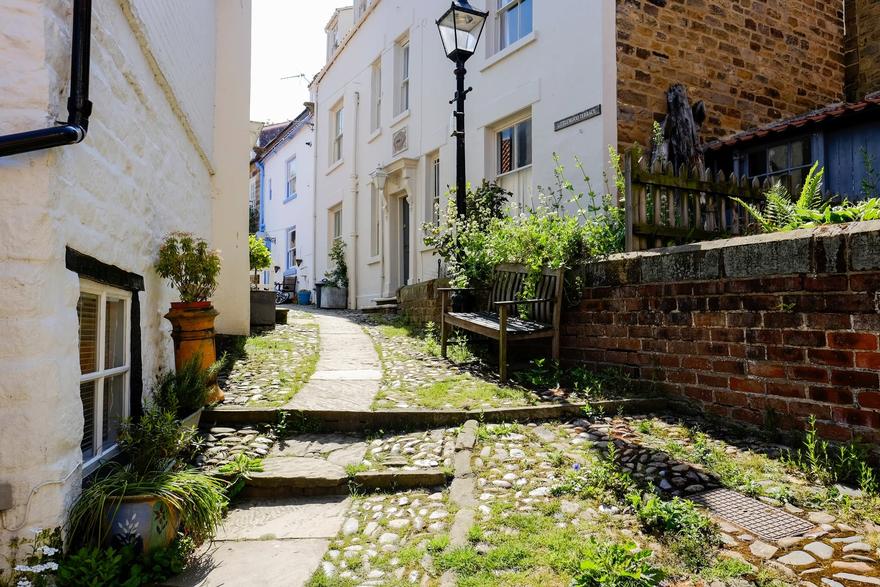
The smugglers are long gone but you can still follow in their footsteps along the narrow alleyways of Robin Hood’s Bay. As you walk past the huddled houses and cascaded walkways, it’s quite easy to imagine the secret passageways and underground tunnels. You can find out more in the volunteer-run (check opening hours) Robin Hood’s Bay museum.
Photo: Tony Bartholomew, NYMNPA